


At Oomen Verhuizers, we’ve been working for years to make our business processes more sustainable. From solar panels to electric moving trucks, sustainability is one of the most important themes at Oomen Verhuizers. That’s why our co-owner, Frans Oomen, gave an interview to Evofenedex magazine on the topic of sustainability. Read on to find out what sustainability means to Oomen!
A SUSTAINABLE BUSINESS AND POWER PLANT IN ONE
Oomen Verhuizers is making great strides toward sustainability. The company’s building generates energy, and thus revenue, and an increasing proportion of its fleet consists of solar-powered moving trucks. But that didn’t happen overnight. According to Frans Oomen, sustainable business is only possible if you’re fully committed and manage everything in-house.
Oomen Movers’ Corporate Philosophy
Oomen has a short but impressive history. After finishing high school, son Emile Oomen began delivering packages for PostNL in his own van. With the proper credentials in hand and now owning two vans, he started his own moving company on January 1, 2015. “You simply can’t lift a bank on your own,” notes his father, Frans, and so they quickly began hiring staff. By the end of the first year, the team had grown to twelve employees, and Emile asked his father to join the company. Since 2016, Emile, his wife Stephanie, and his father Frans have been working together as business partners to further develop the company.
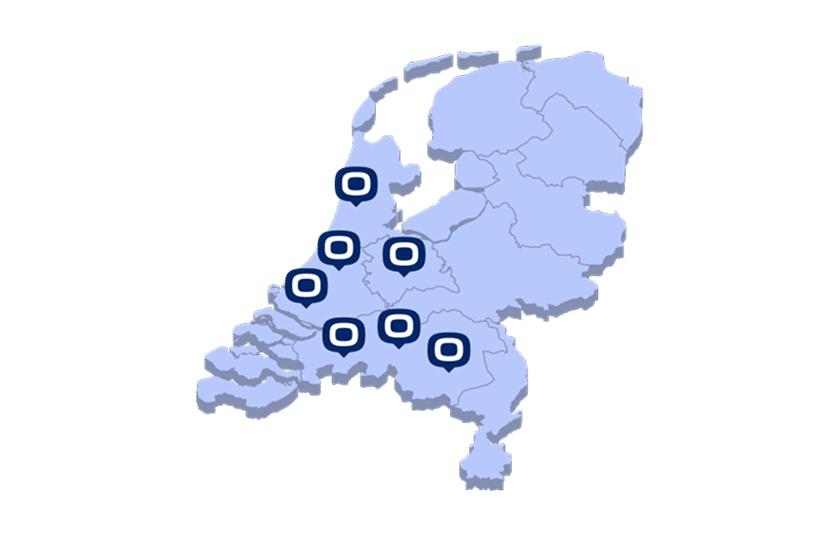
“We enjoy building something, leading the way, and being sustainable,” says Frans, summarizing the company’s philosophy. “Together, we form an ambitious team. Emile’s vision forms the foundation of what we do, and my role is to bring together all the people and parties needed to make that happen.” That approach has proven successful. About 35 people now work at the Katwijk location. With the acquisition of Nouwens Verhuizingen in Tilburg, that same number of employees was added in the summer of 2023.
Frans: “We are now one of the largest private moving companies in the Netherlands. And with 900 containers, our storage facility is also the largest of its kind. We’re a young and forward-thinking company that isn’t held back by tradition. That gives us the freedom to try new things and take risks. We love to win and operate on the cutting edge. Of course, things sometimes go wrong, but that’s exactly what we learn from. The result of our approach is that we’ve been growing by at least fifty percent annually for eight years in a row, and this year, thanks to the acquisition, by as much as one hundred percent. In fact, the only thing limiting our growth is the challenge of finding enough new employees.”
Energy efficiency rating: A+++++
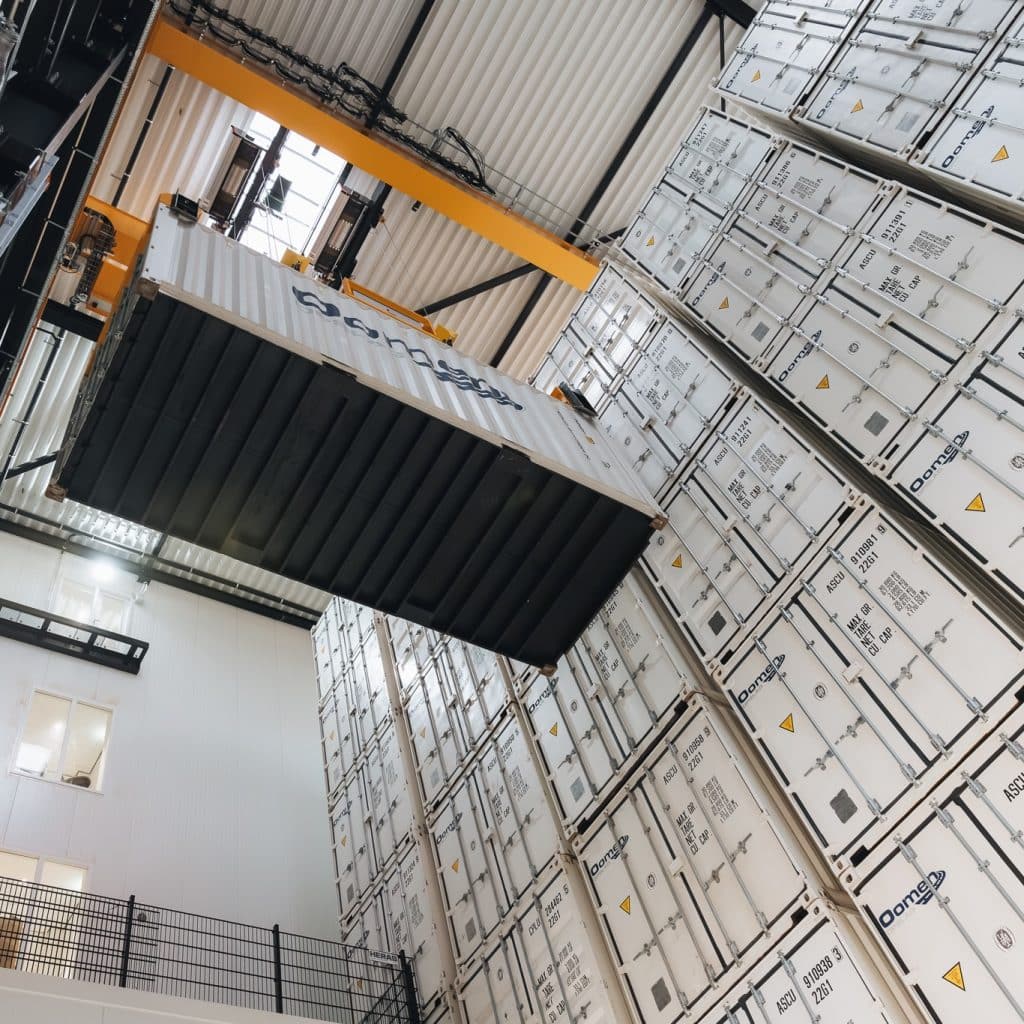
The steps the company has taken and plans to take call for a suitable building. In Katwijk, Oomen has been operating for just under 3 years out of a warehouse that’s no less than 24 meters high, with offices at the very top from which the dunes can be seen. The modern facility houses Oomen’s automated system for storing household goods and other items in containers. Spread across two locations, there are about 900 containers, nearly all of which are in use. The building is also fully equipped to ensure operations are as sustainable as possible. There are charging facilities for electric cars and for the growing number of solar-powered moving trucks that the company operates. The building is gas-free, generates more energy than it consumes, and therefore holds the highest energy efficiency rating: A+++++.
Of course, all that energy has to come from somewhere. The roof and awning of the Oomen Verhuizers building, which were specially designed for this purpose, are equipped with six hundred solar panels. The company only has a grid connection for small consumers, because peaks in electricity consumption are offset by energy stored in a number of batteries, a process known as “peak shaving.” But according to Frans, it certainly didn’t happen on its own. A tremendous amount of research had to be done, and it requires substantial investment and scale to make it cost-effective.
Power Plant
Frans: “You can really only do this profitably if you own the solar panels, the connection, the storage system, and the charging stations. Our electricity costs us four euro cents per kilowatt-hour, and this rate is locked in for thirty years thanks to the warranty on all the systems and materials we use. With our small-consumer connection, we’re allowed to net meter and feed electricity back into the grid. During the summer months, our 600 panels generate about twice what we need ourselves, and in the winter there’s still enough to meet our own needs. We only draw power from the grid in December and January.”
He continues: “Thanks to smart meters at the charging stations, we earn Renewable Fuel Units (RFUs). We can sell these to companies that use them to offset their harmful transportation emissions, similar to trading in CO2 credits. As a result, we even earn money on the kilometers our moving trucks travel using solar power, because that generates sixteen cents per kilowatt-hour for us. I sometimes say that we’re not so much a fully sustainable moving company as we are a power plant.”
Payback Period
For Oomen Verhuizers, sustainability isn’t a faucet that immediately started dripping money the moment it was turned on, as Frans emphasizes. The company believes in sustainability and is eager to be a leader in the field. In this drive to move forward, Oomen has fully immersed itself in software, solar panels, inverters, HBE systems, grid connections, subsidy programs, and much more. Armed with this in-house expertise, the company has made substantial investments, a significant portion of which were made without subsidies, because scale and volume are crucial ingredients for green success. This has led to a situation where, on balance, the company makes a profit from the electricity it generates itself, with the long-term goal of recouping its investments. This is made possible, for example, by the nature of the company’s work.
“In the moving and distribution industries, vehicles aren’t on the road all day. That means you can charge them overnight using your own facilities. If we had to recharge our moving trucks along the highway, all the advantages mentioned earlier would be completely negated by the costs,” said Frans.
So this approach isn’t feasible yet for transportation companies? “It’s certainly very challenging. If you drive fixed routes or within a limited area every day, there are definitely possibilities. But if you’re driving to Spain, it’s still out of the question to do that with electric vehicles.”
Solar Power
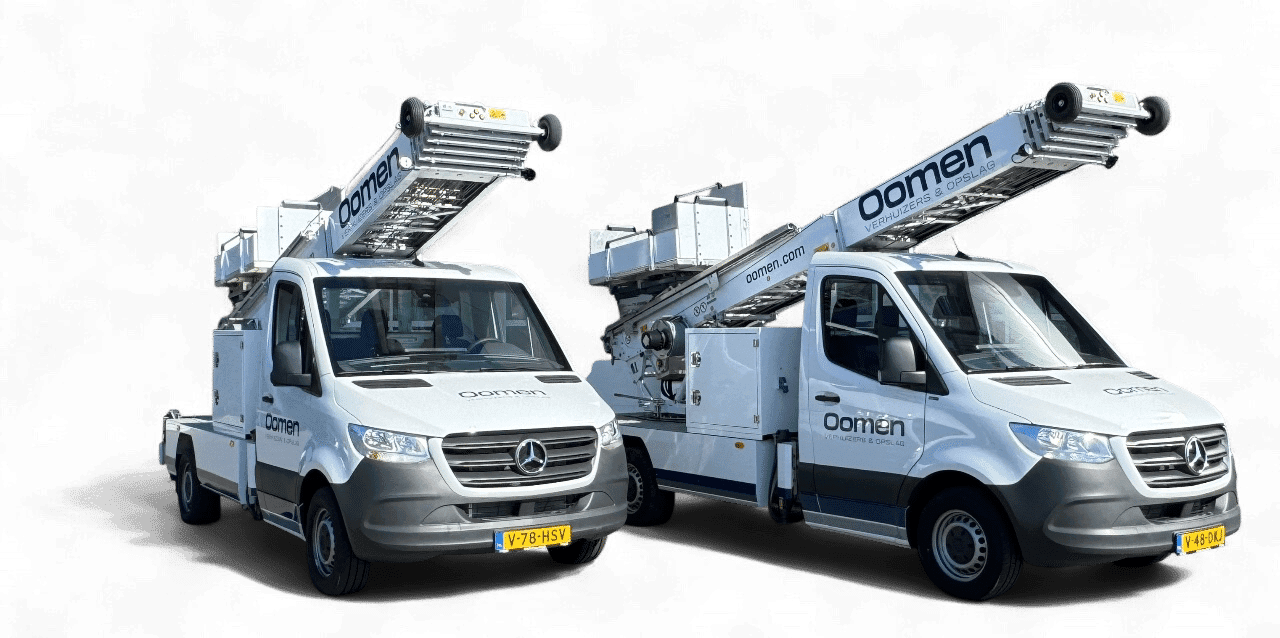
The most visible example of Oomen’s approach is the solar-powered moving trucks the company uses. The company currently has six of these in use, as well as seven electric passenger cars for employees. A portion of the fleet, which consists of approximately thirty vehicles, still runs on diesel, and the moving company plans to gradually electrify it, including in Tilburg, where the necessary infrastructure still needs to be established. “We still regularly drive a moving truck to Spain, and as I mentioned, that can’t be done with an electric vehicle yet. But we’ll replace all diesel vehicles with electric ones as soon as possible. That would be unaffordable without the Aan ZET subsidy, by the way. I also know moving companies that missed out on this subsidy and therefore can’t go green yet. So we’re simply lucky that we were selected for the subsidy.”
A Different Mindset
Frans advises companies that are not yet ready to take the step toward sustainability to actively work toward the point when they will be able to do so. “You can already start saving for the investment, doing your research, preparing, and adapting your building for it. To do this optimally, you really need a new building, because an old one imposes too many limitations.” Frans is also happy to offer others advice and support. “I’d like to shift the mindset from ‘it can’t be done’ to ‘what can be done?’ Making that shift is complicated, but it has to happen eventually, and it can be achieved by starting small and starting early. Entrepreneurs really need to start thinking differently to tackle sustainability and other major challenges.”
.
Evofenedex Magazine | October 2023