English
 Nederlands

 We are here for you088 321 99 00
Blog
How much storage space do I need?

Written byGuido BaalbergenCommercial Director
Published29 September 2026
Reading time7 minutes
More about GuidoSummary
How much storage space you need depends on your belongings, how well they stack and whether you want to get to them in the meantime. This is how you make an inventory, calculate in m³ and compare the four Oomen container sizes.
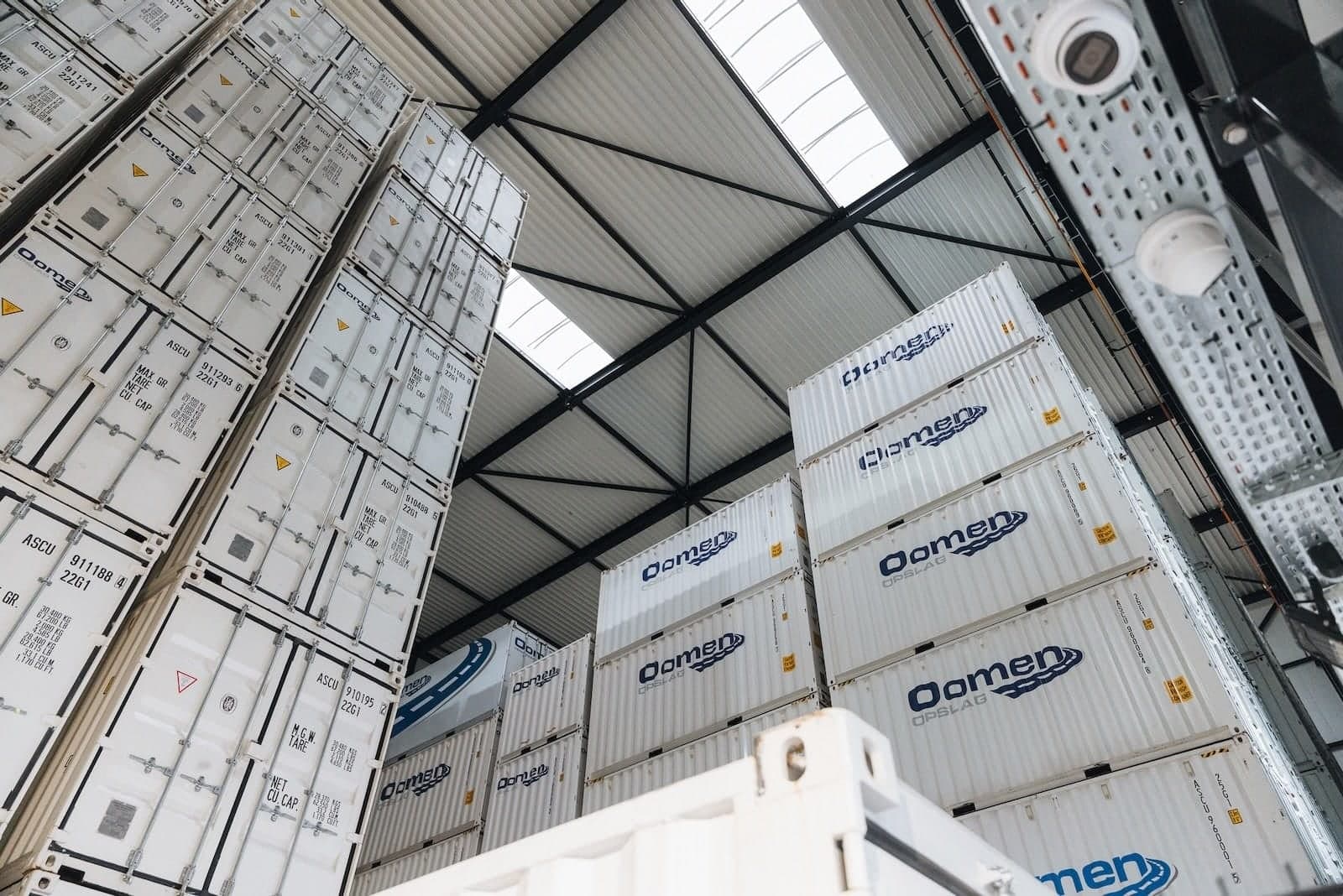
How much storage space you need depends on what you store, how well you can stack it and whether you want to get to it in the meantime. So the volume of your belongings is not the same as the space you rent: there are gaps between pieces of furniture, not everything can be stacked and an aisle takes up space too.
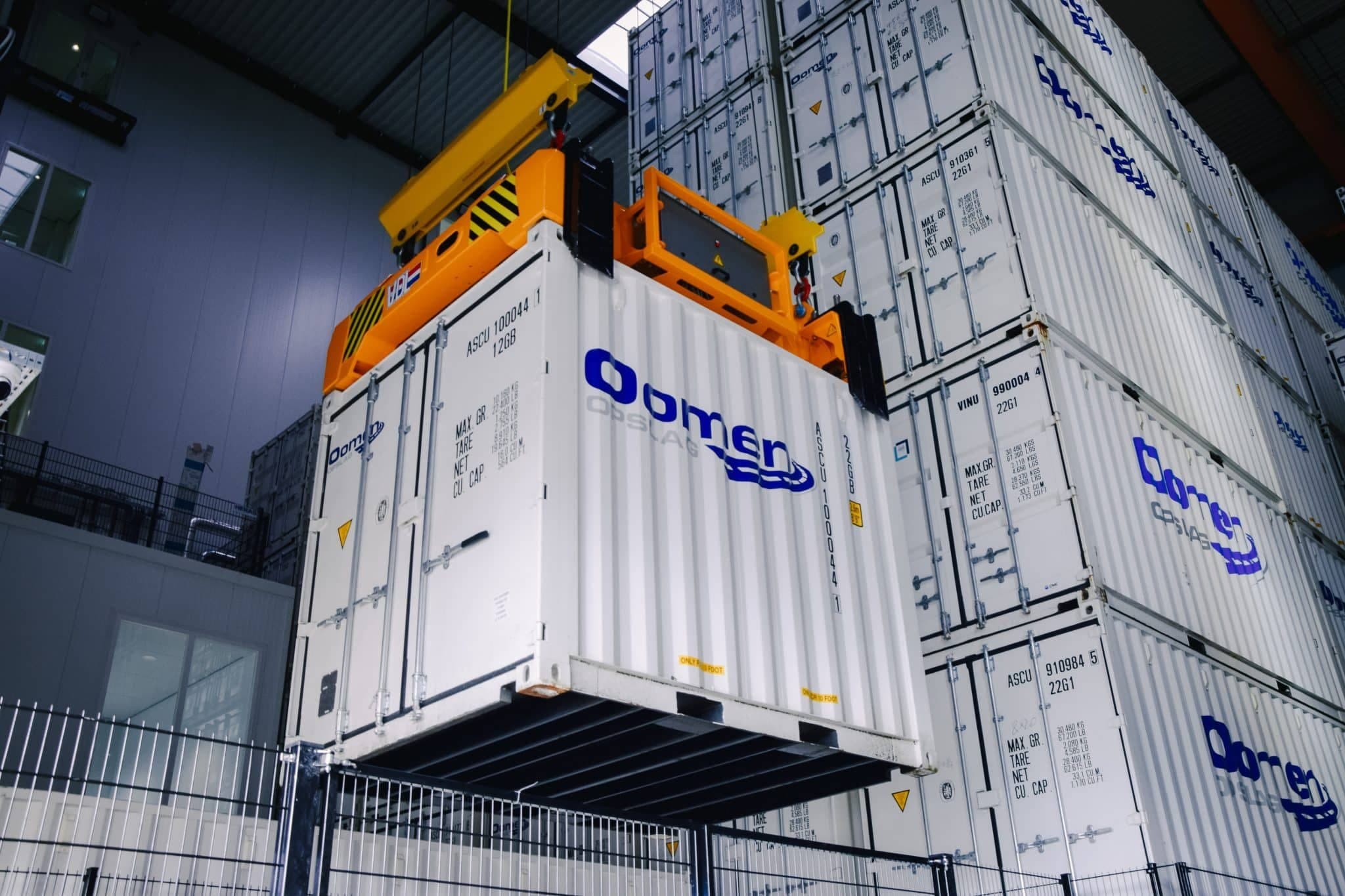
Oomen rents out containers in four sizes, from 10 m³ to 37 m³. The smallest size, the 8ft container of 10 m³, is only available in Tilburg. Below you can read how to estimate which size suits you, and how to have that estimate checked before you commit to anything.
1. Make an inventory of your belongings
Go through your home room by room and write down what is going into storage. Note the dimensions of large furniture and count the boxes per room. You will need that list for your request as well.
- Furniture: sofa, armchairs, dining table and chairs, wardrobes and cabinets, beds and mattresses, desk and TV unit. Note whether they can be taken apart.
- White goods: washing machine, dryer, fridge and freezer.
- Boxes: count them per room, or estimate how many shelves, cupboards and drawers you need to empty.
- Long and tall items: a tall wardrobe, a mirror, a tabletop or a ladder. Write down the longest and the tallest measurement.
- Shed and garden: bicycles, garden furniture, a lawnmower and tools.
- Loose items: lamps, paintings, rugs, children's things and seasonal items.
2. The difference between m² and m³
Floor area, in square metres (m²), is length times width: how much floor you have. Volume, in cubic metres (m³), is length times width times height: how much space you have if you fill it to the top. Storage is measured in cubic metres, because you stack things in a container.
Take the 10ft container, which measures about 2.80 × 2.35 × 2.39 m. Its floor area is about 6.6 m². If you stack to the top, you use the full volume. If there is a sofa you cannot put anything on, the space above it partly stays empty and you are left with less volume on the same floor.
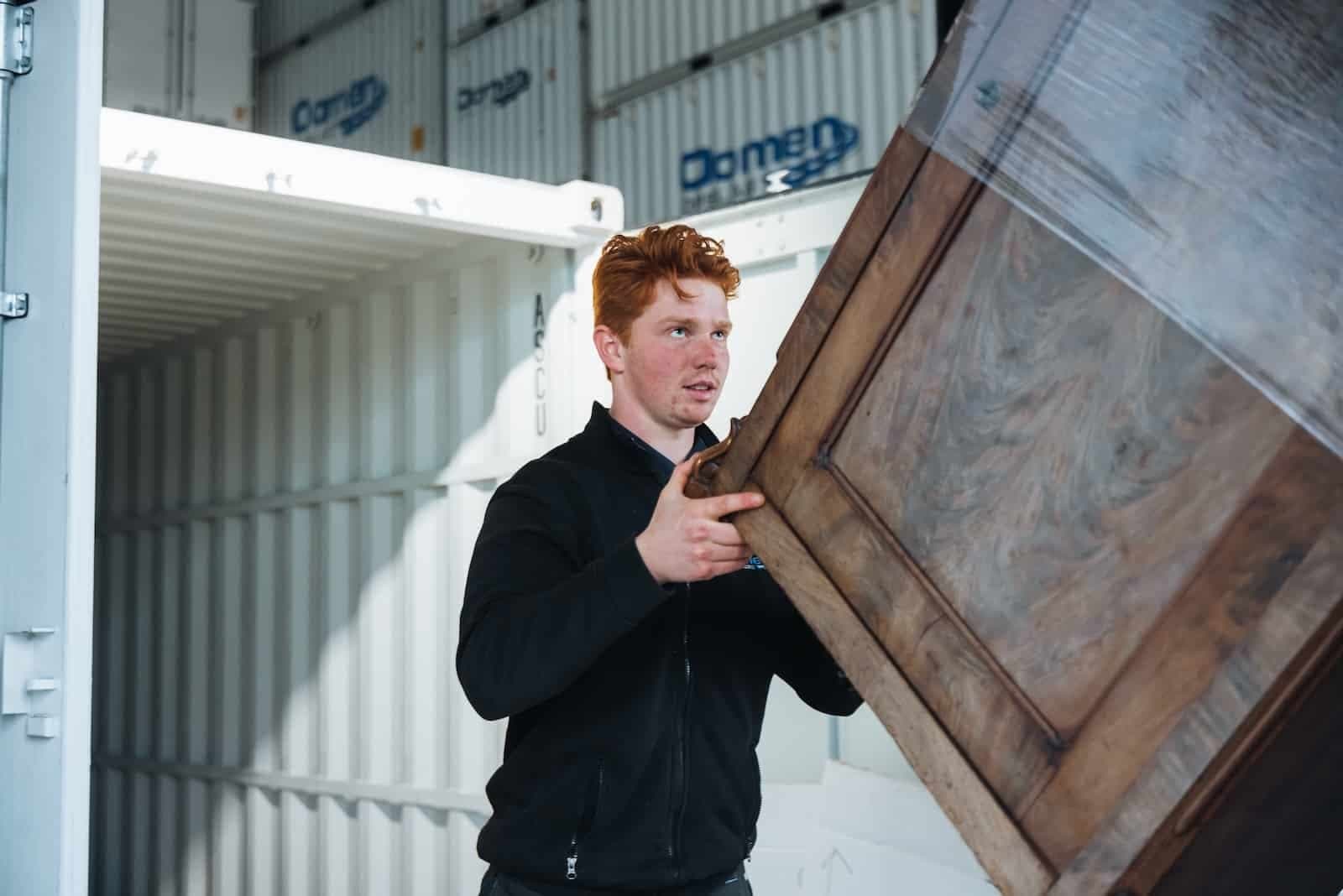
Boxes of the same size can be stacked stably to the top. Wardrobes and white goods stand upright, and you do not put anything heavy on a sofa or mattress. Furniture that can be taken apart takes up less space dismantled. The better you stack, the closer you get to the full volume of the container.
3. Estimate the space you need
Measure and add up
- Measure the length, width and height of each large piece of furniture in metres.
- Multiply those three measurements. A sofa of 2.00 × 0.90 × 0.80 m takes up 1.44 m³.
- Measure one moving box, work out its volume and multiply that by the number of boxes.
- Add everything up. That is the volume of your belongings themselves.
From calculated volume to the space you need
The number you get this way is a minimum. In practice you need more space: there are gaps around furniture, not everything can be stacked, and if you want to get to your things in the meantime, you keep an aisle free. So choose a size with clearly more volume than your calculated volume. If you are in doubt between two sizes, take the larger one.
Also look at your longest and tallest item. The 8ft container is 2.06 m high inside, so a wardrobe that is taller will not stand upright in it. If an item is taller than 2.39 m, the 20ft high cube with 2.69 m of internal height is the only one tall enough.
4. Take access into account
A container opens at the door end. What is at the back only comes out once the rest has been moved aside. If you want to get to your things in the meantime, put what you need at the front and leave a narrow aisle if necessary. That aisle takes up space, so include it when you choose your size.
How often you can get to it depends on the type of storage:
- Automated self storage in Katwijk and Tilburg: your container is made ready at a covered loading bay. In Katwijk you book that yourself through the app, until 19:00 on working days and until 17:00 at weekends. In Tilburg it is by appointment, during office hours.
- Storage container at your door: the container stands on your driveway or premises and you walk over whenever you need something. That is possible within about 30 kilometres of a branch.
- Mobile storage in our facility: we take the container away sealed. Access in the meantime is possible at a time booked in advance; how that works differs per branch.
If you won't need any of your belongings during the storage period, you can fill the container completely. If you want to get to them often, allow more space.
5. Comparing the sizes
Oomen has four container sizes. The dimensions are as Oomen states them; the floor area is calculated from them. If it does not fit in one container, you combine sizes.
Container | Volume | Dimensions (l × w × h) | Floor, approx. | At your door |
|---|---|---|---|---|
8ft container | 10 m³ | 2.29 × 2.11 × 2.06 m | 4.8 m² | Fits in one parking space or on a short driveway. |
10ft container | 16 m³ | approx. 2.80 × 2.35 × 2.39 m | 6.6 m² | Fits on a spacious driveway. |
20ft container | 33 m³ | 5.90 × 2.35 × 2.39 m | 13.9 m² | Needs the length of about one and a half cars. |
20ft high cube | 37 m³ | 5.90 × 2.35 × 2.69 m | 13.9 m² | Same spot as the 20ft, 30 cm taller. |
Three examples
These examples are indications, not a fixed capacity. How much really fits depends on your belongings and how they are stacked.
A few pieces of furniture
During a renovation you store a sofa, a wardrobe and twenty boxes. In this example we assume these dimensions: the sofa 2.00 × 0.90 × 0.80 m (1.44 m³), the wardrobe 1.00 × 0.60 × 2.00 m (1.20 m³) and a box of 0.50 × 0.35 × 0.35 m (just over 0.06 m³, so about 1.2 m³ together). Added up, that is almost 4 m³. With space around the sofa and the wardrobe, this example stays well within the 10 m³ of the 8ft container, and the 2.00 m wardrobe stands upright in it. Measure your own belongings: your measurements may differ considerably.
Part of your household contents
For a renovation you empty the living room and a bedroom. Make the list for those rooms only and add up as above. If you come close to 10 m³, look at the 16 m³ of the 10ft container, so there is space left for what you cannot stack. If you want to fetch something during the work, a container at your door or self storage is the obvious choice.
A complete household between two homes
If there is time between your old and your new home, the whole household goes into storage. If you choose moving with storage, your account manager first does a survey, at your home or by video call, and determines the volume. Our movers load the container and stack it stably to the top. You do not have to calculate anything yourself; if one container is too small, we combine sizes.
6. Have your estimate checked
You do not have to decide on the size on your own. In your request you state roughly how much space you expect: up to 10 m³, 10 to 20 m³ or more than 20 m³. Your account manager checks whether that matches what you want to store. On working days you get a response within an hour.
Put your inventory list in the comments field of the request: the furniture with dimensions, the number of boxes and your longest and tallest item. Also mention whether you want to get to your belongings in the meantime. During a survey your account manager determines the volume on site or from photos and video.
What storage costs and how the price is made up is explained in What does furniture storage cost? You will find the types of storage and the locations on our storage space page.

Written byGuido BaalbergenCommercial Director
Hi! I'm Guido Baalbergen. For more than 9 years I have been putting my energy into my role as Director at Oomen Verhuizers. I make sure everything runs smoothly, with customers and behind the scenes. Moving is a trade of its own, and I enjoy telling you more about it in my blogs. So if you are looking for handy moving tips, do keep reading!
More about Guido