English
 Nederlands
 We are here for you088 321 99 00
Blog
Practical steps for clearing out a home after a death

Written byGuido BaalbergenCommercial Director
Published4 February 2026
Reading time4 minutes
More about GuidoSummary
Tackle clearing out a home after a death step by step and start with an overview: who is involved, what the deadlines are and which rooms come first. Go through the household contents by category. If you don't yet know what to do with some belongings, you can store them temporarily and still hand over the home empty.
For many families, clearing out a home after a death is a heavy and unfamiliar task. Alongside the grief and the memories, practical questions come your way too. Where do you start, what needs arranging and how do you keep it all from becoming too much? Taking the process one step at a time brings calm and clarity. In this blog you can read which steps matter and which choices you can make along the way.
What is involved in clearing out a home after a death
Clearing out a home after a death involves far more than simply moving belongings. You have to deal with emotions, time pressure and practical decisions. Often a property has to be empty because of a sale, a handover or a transfer within the family. It helps to understand everything that is involved before you begin.
Step 1: create calm and clarity before you begin
Take time to reflect on the situation before you get started. Clearing the house after a death does not have to happen straight away. By creating an overview first, you avoid making hasty choices you may regret later.
Map out who is involved, what the deadlines are and which rooms take priority. That gives you a plan that fits your situation.
Step 2: decide what happens to the contents
Clearing a property after a death means making choices about personal possessions. Some things you will want to keep for their sentimental value, others will find a new home or need to be disposed of. It helps to work through this category by category rather than tackling everything at once.
You can choose to put decisions on hold for a while. Belongings do not always have to go straight away, as long as they are gathered together in an orderly way.
Step 3: clear the house yourself or call in help
Some families choose to clear the house themselves, while others bring in help. What suits you depends on time, distance and emotional headroom. A professional removals company can support you in moving the contents and in the practical side of clearing the property. Combining a move with proper guidance often brings more calm at a time when there is already a great deal going on.
Common scenarios when clearing out a property
No two situations are the same. Even so, certain scenarios come up again and again when clearing out a home after a death.
A rented home that has to be handed over quickly
Rented homes often come with a tight handover deadline. That creates time pressure and calls for clear planning. In such cases it is important to act quickly, without losing the overall picture.
A privately owned home that is being sold
When the property has to be sold, it is important that it is handed over empty and tidy. There is often time to spread the process out. That leaves room to make choices carefully.
Family members living far away
If relatives do not live nearby, arranging everything yourself becomes difficult. Making several visits is not always feasible. Help on site can then be the answer.
Little time or emotional headroom
Sometimes the emotional strain is simply too great to do everything yourself. In that case it is sensible to hand the practical tasks over to someone else. That leaves room to process the loss.
Temporary storage as an interim solution
If you are not yet sure what to do with certain belongings, temporary storage is a logical step. Using storage keeps belongings safely stored until there is enough calm to make decisions.
This means you do not have to sort through everything in one go, while still being able to hand the house over empty.
Practical points to watch during the clearance
Alongside the emotional choices, there are practical matters that need attention during the process.
- Planning: work room by room and set realistic goals for each day
- Access: check whether the stairs, lifts and doorways offer enough room
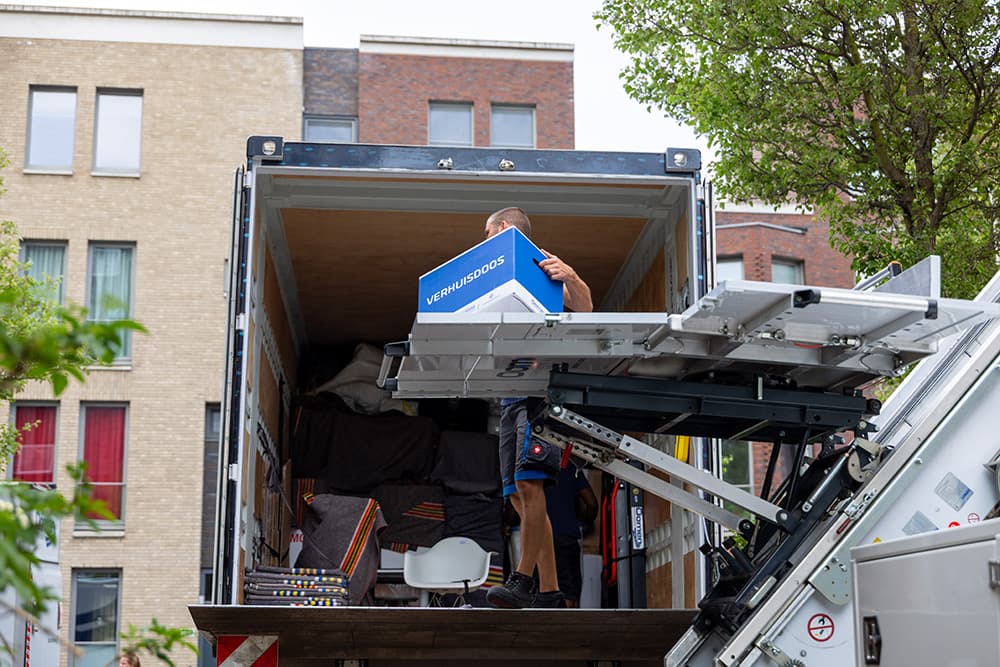
- Heavy furniture: think in advance about equipment such as hiring a furniture hoist
Taking these points into account beforehand prevents unnecessary delays and stress.
What does clearing out a home after a death cost
The cost of clearing out a home after a death differs from one situation to the next. It depends on the size of the property, the volume of contents and how much you do yourself. Temporary storage and equipment also play a part.
Getting a clear picture of these factors in advance makes it easier to decide what suits your situation and your budget.
Common pitfalls and how to avoid them
In practice, families often run into the same pitfalls.
- Deciding too quickly about items with sentimental value
- Trying to do everything at once without a plan
- Not asking for help when it is really needed
Breaking the process into stages and accepting support keeps it manageable.
Step by step towards completion
Clearing out a home after a death is never an easy task. By working step by step, postponing choices where necessary and calling in practical help, you create clarity and calm. Oomen can play a supporting role in this, so that you can focus on whatever matters most at that moment.

Written byGuido BaalbergenCommercial Director
Hi! I'm Guido Baalbergen. For more than 9 years I have been putting my energy into my role as Director at Oomen Verhuizers. I make sure everything runs smoothly, with customers and behind the scenes. Moving is a trade of its own, and I enjoy telling you more about it in my blogs. So if you are looking for handy moving tips, do keep reading!
More about Guido